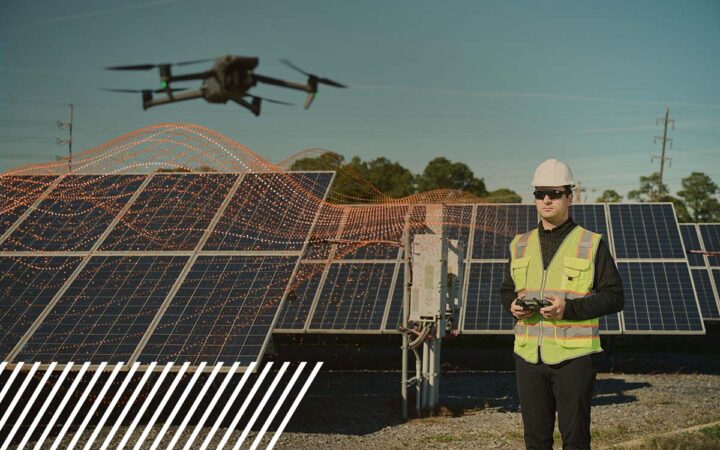
How Is AI and Machine Learning Transforming Data Collection Operations in 2026?
A New Era for Commercial Drone Operations
FAA Part 107 has long been the regulatory backbone of commercial drone operations in the United States. For years, success under Part 107 meant safe flights and compliant pilots. But in 2026, the definition of success is evolving.
Today, the real transformation is happening after the drone lands.
Artificial intelligence (AI) and machine learning are fundamentally changing how drone data is processed, analyzed, and delivered. What was once a manual, time-intensive workflow is becoming faster, smarter, and more scalable, without sacrificing compliance or accuracy. The industry is shifting from simply collecting data to delivering intelligence.
What AI and Machine Learning Mean for Drone Pilots
AI and machine learning are often used interchangeably, but in drone operations, they serve distinct, practical purposes.
AI refers to systems designed to mimic human decision-making, while machine learning focuses on algorithms that improve over time by analyzing large volumes of data. In the context of Part 107 operations, machine learning models are trained on thousands, sometimes millions, of images, point clouds, and datasets to recognize patterns, anomalies, and changes far faster than a human ever could.
Importantly, AI is not replacing Part 107 drone pilots. Instead, it’s augmenting their capabilities. The pilot remains responsible for safe flight operations, regulatory compliance, and mission execution. AI enhances what happens next: turning raw imagery into meaningful insights that customers can act on.
Smarter Data Processing: From Raw Imagery to Actionable Insights
One of the most significant impacts of machine learning in 2026 is the speed and quality of data processing.
AI-powered workflows can now:
- Automatically detect assets, defects, and anomalies
- Identify changes over time through advanced change detection
- Classify terrain, vegetation, and structures with greater consistency
- Reduce post-processing timelines from weeks to hours, or even minutes
These systems minimize human error by applying the same logic across every dataset, every time. Instead of manually tagging features or reviewing thousands of images, human experts focus on validating outputs, interpreting results, and ensuring accuracy.
The result is faster turnaround, higher confidence in deliverables, and more consistent outcomes, especially for large-scale or repeat missions.
Real-World Applications Across Regulated Industries
AI-driven processing is already delivering tangible value across industries that rely heavily on Part 107 operations.
Construction and engineering teams are using machine learning to track progress, calculate volumes, and generate digital twins with unprecedented efficiency. Automated comparisons between planned and as-built conditions help stakeholders spot issues earlier and reduce costly delays.
In energy and utilities, AI accelerates inspections of power lines, substations, solar farms, and flare stacks. Machine learning models can flag defects or anomalies that may be difficult to spot manually, supporting safer inspections and proactive maintenance.
Agriculture continues to benefit from AI-powered crop analysis, where algorithms monitor growth stages and detect stress, disease, or irrigation issues across vast acreages. These insights help producers make more informed decisions while reducing the need for manual field scouting.
For public safety and infrastructure, AI enables faster damage assessments after storms or disasters, supporting emergency response and recovery planning with accurate, up-to-date data.
How AI Is Enhancing Compliance and Risk Management
As operations become more complex, AI is also strengthening compliance and risk mitigation—two critical pillars of Part 107.
Machine learning supports smarter flight planning by analyzing terrain and obstacles. AI-assisted anomaly detection can flag potential issues in data that may indicate operational risks or inconsistencies.
On the documentation side, AI-driven workflows help standardize deliverables, making it easier to maintain audit-ready records that align with FAA expectations and customer requirements.
Crucially, AI supports compliance. It does not override it. Part 107 regulations still require human oversight, decision-making, and accountability at every stage of the mission.
The Evolving Role of the Part 107 Pilot in an AI-Driven World
As AI becomes more integrated into processing workflows, the role of the Part 107 pilot is becoming more, not less, important.
Pilots are no longer just data collectors. They are data quality managers, safety authorities, and subject-matter experts who understand how flight conditions, sensor settings, and mission planning affect downstream results.
In 2026, successful pilots are those who:
- Understand how AI-generated outputs are created
- Can validate and question automated results
- Maintain human-in-the-loop oversight for mission-critical decisions
- Bridge the gap between technology and real-world conditions
AI handles scale and speed; pilots ensure accuracy, safety, and trust.
Operational Efficiency at Scale: What AI Unlocks
For organizations operating at scale, AI is a game-changer.
Machine learning enables standardized deliverables across distributed pilot teams, ensuring consistent quality regardless of location. It allows companies to process massive volumes of data without bottlenecks, supporting faster decision-making for customers.
This efficiency translates into reduced costs, quicker insights, and the ability to support more missions without compromising operational excellence. In competitive markets, AI-driven processing is no longer a nice-to-have; it’s a differentiator.
Challenges and Considerations in 2026
Despite its advantages, AI adoption comes with important considerations.
Data integrity remains critical. AI models are only as good as the data they are trained on, and bias or poor-quality inputs can lead to flawed outputs. Security, privacy, and data ownership must also be carefully managed, especially when handling sensitive infrastructure or agricultural data.
From a regulatory standpoint, FAA guidance continues to evolve. Operators must stay informed.
Choosing the right processing partners and maintaining transparency in AI workflows is essential to long-term success.
What This Means for the Future of FAA Part 107 Operations
The future of Part 107 operations is not just automated; it’s intelligent.
AI is transforming drone programs from manual workflows into connected ecosystems where data flows seamlessly from capture to insight. Customers increasingly expect not just imagery, but answers. Machine learning makes that possible at scale.
Operators who embrace AI thoughtfully, without compromising compliance or safety, will be best positioned to lead as regulations, technology, and customer expectations continue to evolve.
Embracing the AI Processing Revolution
The AI processing revolution is redefining what’s possible. Machine learning is accelerating insights, improving consistency, and enabling smarter decision-making across industries.
But at its core, success still depends on people—trained pilots, operational experts, and organizations committed to doing things the right way.
AI is not a shortcut. It’s a tool. When combined with strong processes, regulatory discipline, and real-world expertise, it becomes a powerful driver of operational excellence in the next era of commercial drone operations.