How Are Utilities Rethinking Asset Management in High-Risk Environments Like Wildfires and Severe Weather?
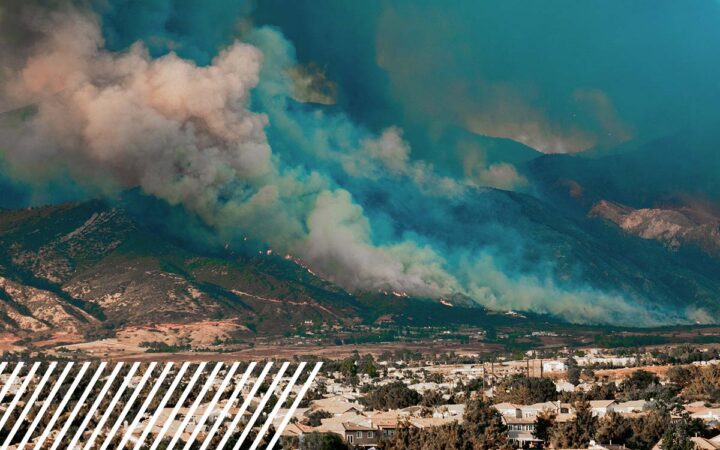
Utilities operating in wildfire-prone and disaster-impacted regions are facing a new reality. Risk is no longer seasonal or predictable; it’s dynamic, fast-moving, and increasingly scrutinized by regulators. To manage this risk effectively, utilities are being forced to rethink how they assess asset condition, collect data, and respond in real time.
To better understand how utility asset management is evolving in high-risk environments, we sat down with Josh Pollock (JP), a utility and infrastructure expert who works closely with utilities facing wildfire risk, storm response, and regulatory pressure.
From Assumptions to Asset-Level Insight
One of the biggest challenges utilities face today is limited asset-level visibility. Historically, many inspection and asset management programs have relied on general indicators, like age or location, rather than condition insights tied to individual assets.
“That model fails to scale effectively in high-risk scenarios,” JP explains. “When utilities treat all assets the same, they lose visibility into true risk. And in events like wildfires or PSPS (Public Safety Power Shutoff) situations, that lack of visibility forces overly broad decisions.”
Without asset-level data, utilities may shut off power across large areas simply because they cannot confidently determine which assets pose the highest risk. According to JP, this is often driven by underlying data gaps, not a lack of intent.
“There’s often an assumption the data exists somewhere,” he says. “But many traditional EAM and GIS systems weren’t built to natively manage imagery or unstructured inspection data at scale. That gap creates real blind spots.”
Why Imagery Has Become Foundational
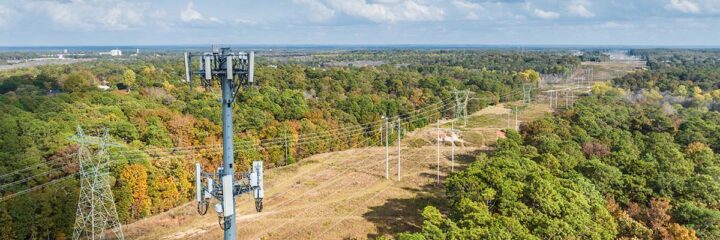
Imagery has emerged as one of the most powerful tools utilities have to close these data gaps. High-resolution aerial imagery enables utilities to identify defects, validate asset condition, and build accurate, per-asset inventories.
JP points to PG&E as a public example of how impactful this shift can be.
“PG&E went from essentially having no imagery to capturing imagery across their entire network,” he says. “Once they did that, they publicly stated that roughly a third of their assets required mitigation. That’s the power of actually seeing your infrastructure.”
While large Investor-Owned Utilities (IOUs) have the resources to build internal drone programs, JP notes that many utilities don’t. And they shouldn’t have to.
“That’s where FlyGuys comes in,” he explains. “Most organizations don’t want to manage drone operations—they want reliable data. FlyGuys serves as a single point of execution for reality capture, delivering aerial imagery and spatial data without the operational burden.”

Regulatory Pressure Is Raising the Stakes
Regulators are playing a more active role in how utilities approach risk. What was once a compliance-driven process has become an ongoing dialogue focused on prevention and preparedness.
“The conversation with regulators has changed,” JP says. “It’s no longer just about identifying gaps after something happens. It’s about how utilities are improving their risk posture ahead of time, and asset condition is at the center of that.”
Asset condition is among the most closely scrutinized factors in disaster planning and response. Utilities are increasingly expected to justify mitigation decisions with data, not averages.
“If you’re averaging asset age across a feeder line, you’re masking risk,” JP explains. “A 1950 pole and a 2000 pole don’t present the same risk, but on paper, they often get treated that way. Imagery lets you assess what actually matters.”

Wildfire Risk Is Changing—and So Must Inspection Strategies
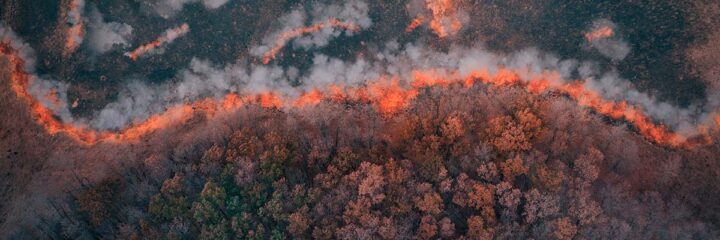
Wildfires today are larger, faster, and more unpredictable, often driven by wind patterns that can shift risk in real time. These conditions require utilities to adopt stepped-up inspection approaches that go beyond traditional cycles.
“Wildfires are no longer isolated events,” he says. “They’re fast-moving, multi-hazard scenarios. From a utility perspective, the critical question becomes, which assets are in the path, and what is their condition right now?”
Stepped-up inspection programs supported by aerial imagery help utilities forecast risk, plan PSPS events more precisely, and respond proactively rather than reactively.
The Data That Drives Better Decisions
Different parts of the grid require different data types to accurately model risk:
- Transmission: RGB imagery for tower and insulator inspections
- Vegetation Management: LiDAR for corridor analysis and clearance measurement
- Distribution: Imagery to correct outdated GIS records and assess pole condition, splices, insulators, and easements
“On the distribution side especially, a lot of GIS data is outdated or incomplete,” JP notes. “Imagery helps utilities validate what’s actually in the field and update their systems accordingly.”

Streamlined Operational Logistics Matter in High-Risk Events
During storms or wildfire threats, utilities shift into emergency response mode. Normal operations stop, and speed becomes critical.
“The faster you can get eyes on the asset, the faster you can create a work order and mitigate risk,” JP says. “That speed can make a real difference.”
However, many utilities struggle operationally because they don’t want to become drone service providers themselves. Managing pilots, aircraft, and regional vendors adds complexity to already chaotic situations.
“Utilities end up juggling multiple providers across regions,” explains JP. “FlyGuys removes that friction by acting as a single nationwide vendor with operational control.”

How FlyGuys Supports Utilities in Risk Situations
FlyGuys enables utilities to respond faster and smarter in high-risk scenarios by providing:
- Asset-level visual intelligence
- Rapid-response data capture during wildfires and storms
- Nationwide coverage with a single vendor
- Scalable solutions without internal drone programs
- API integrations that deliver data directly into utility systems in near real time
“You dispatch a request, FlyGuys handles execution, and the data lands where you need it,” JP says. “That operational simplicity is critical during high-risk events.”

Looking Ahead
As risk environments continue to evolve, utility asset management will only become more data-driven and time-sensitive. Utilities that can quickly capture, analyze, and act on asset-level data will be better positioned to protect infrastructure, meet regulatory requirements, and reduce unnecessary outages.
“In high-risk environments, visibility is everything,” JP says. “The utilities that can see clearly and act quickly are the ones that will manage risk most effectively.”